



THE NATIVE PORTAL STOPS WHERE RESALE BEGINS
Starlink's own tools are built for managing your own account, and they do that job well.
The strain starts when the fleet stops being yours alone. Multiple service accounts, thousands of service lines, shared data pools, customer invoicing, and white-label branding are not what the native portal is for. Resellers feel this first, because resale is exactly that workload.
The usual workaround is manual. Spreadsheets reconcile usage across accounts, forum guides explain how to juggle dozens of kits, and invoices are assembled by hand at month end. Most ISP billing platforms have no native Starlink integration, so the gap between the dish and the invoice stays open.
Starfleet Hub closes that gap. It is the management layer through which operators order, activate, monitor, and bill Starlink services for their end customers, at 100 to 20,000+ service scale. Explore the full feature set, or see how pooled capacity becomes margin on the data pools page.
ONE PORTAL FOR THE WHOLE OPERATION
Five workloads that outgrow the native portal, handled in one place.

Accounts and Service Lines
Link multiple Starlink accounts and work every service line from one console. Activate, change plans, pause, resume, or cancel, one line at a time or in bulk from a selection, a pasted list, or a CSV.

Pools and Overage
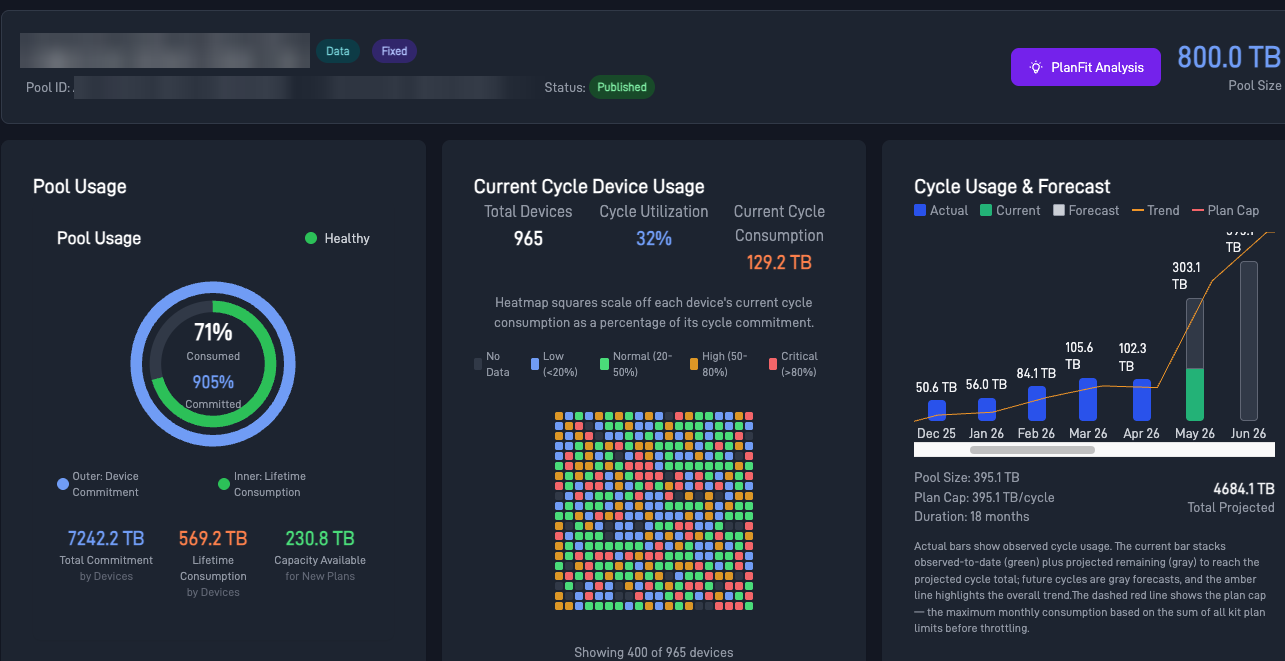
Hierarchical data pools mirror your Starlink contracts and carve capacity down to partners and customers. Oversell with control. Automatic throttling holds the contract ceiling and self-service top-ups turn usage spikes into revenue.

Billing and White-Label
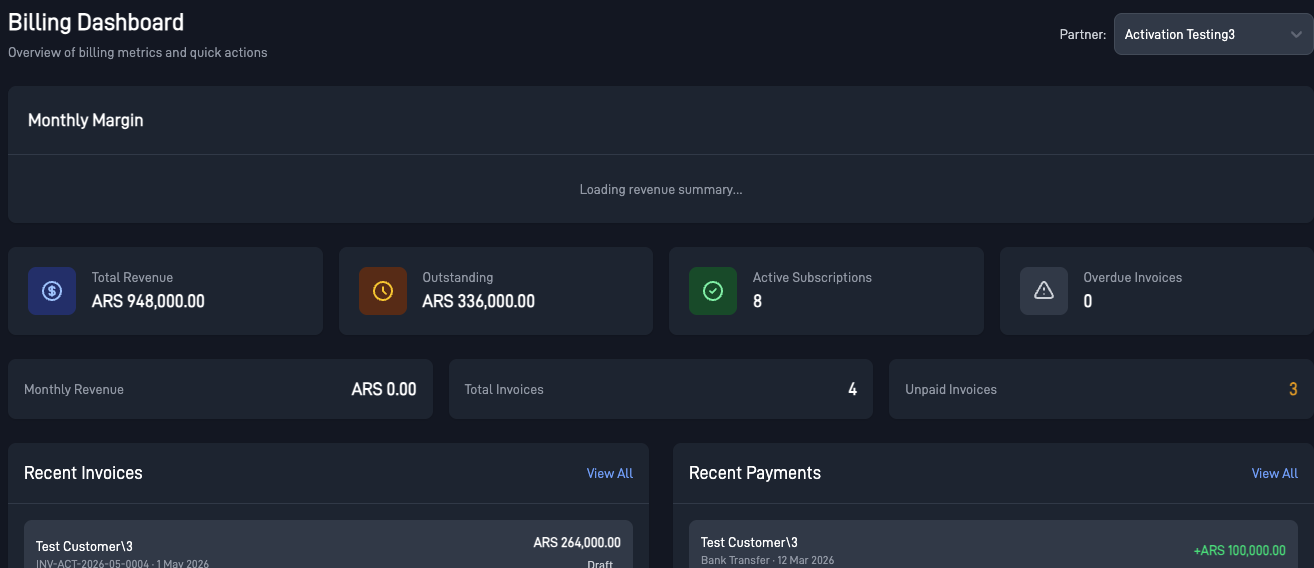
Invoices, payments, subscriptions, credit notes, and dunning in more than 30 currencies. Your logo and brand color apply to the portal, invoice PDFs, and notification emails, so customers see your brand throughout.
Monitoring and Fleet Map
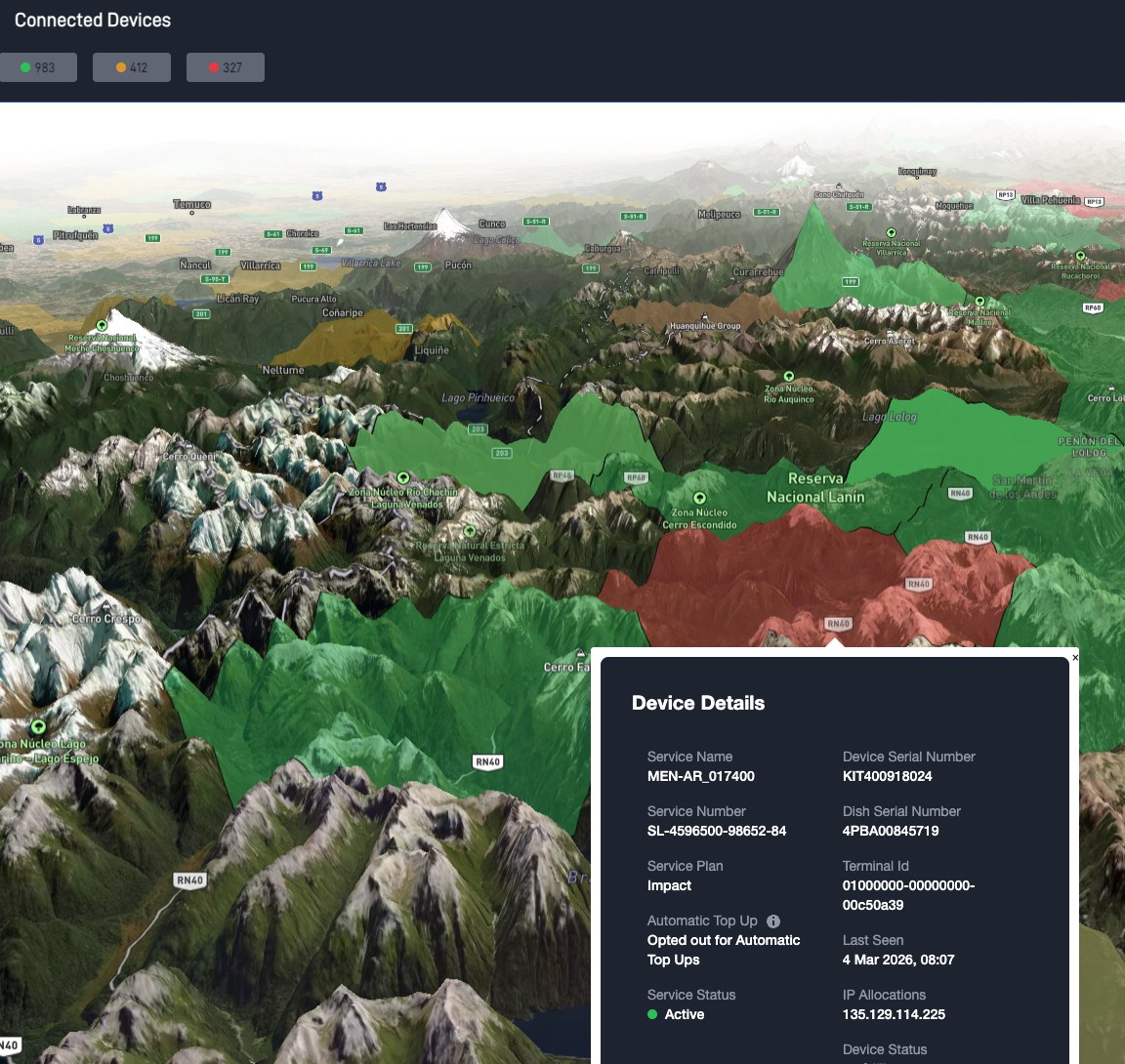
Per-terminal Starlink usage monitoring with connectivity, throttle, overage, and obstruction alerts. A live fleet map keeps tens of thousands of devices legible, with terrain, weather, and Starlink constellation overlays.
Mixed Router Fleets
RouterFleet manages MikroTik, Peplink, Teltonika, and TP-Link routers beside the Starlink router. Managed routers connect outbound over an encrypted tunnel, so sites behind CGNAT need no public IP. Optional module, available on request.
API, Mobile, and Delivery
A documented REST API feeds fleet, usage, and alert data to your own systems. Native mobile apps support installers, field technicians, and warehouse staff. Run the platform as a managed cloud service or as an on-premises appliance.
BUILT FOR THE PEOPLE WHO SELL STARLINK
Authorized Resellers and Dealers
Partners running dozens to hundreds of kits across accounts. Replace the spreadsheet with one register of every service line, pool, top-up, and invoice.
National Resellers and ISPs
Wholesale operators distributing Starlink through partner networks. Hierarchical pools, partner-level billing, and a white label Starlink portal let each tier run its own slice under its own brand.
Enterprise and Government Fleets
Operators of large private fleets. Per-terminal monitoring, a documented API for existing NOC and billing systems, and an on-premises appliance where sovereignty rules out shared cloud hosting.
STARLINK NATIVE PORTAL VS STARFLEET HUB
The native portal is good at what it was made for. The difference is scope, not quality.
| Capability | Starlink native portal | Starfleet Hub |
|---|---|---|
| Managing your own account | Designed for it, with clear views of your own service lines and usage. | Full lifecycle on every line: activate, change plan, pause, resume, cancel, top up. |
| Multiple Starlink accounts | Scoped to the account you are signed in to. | Links multiple accounts, contracts, and countries into one console. |
| Partner and customer hierarchy | No concept of the customers behind your terminals. | Operator, partner, customer, and user tiers with per-tier permissions. |
| Shared data pools | Usage is presented per service line. | Hierarchical pools with throttling, self-service top-ups, and oversell control. |
| Billing your customers | Bills you for the services you buy. | Branded invoices, payments, and credit notes in more than 30 currencies. |
| White-label branding | Presents the Starlink brand. | Your logo and brand color across the portal, invoices, and emails. |
| Third-party routers | Focused on Starlink hardware. | MikroTik, Peplink, Teltonika, and TP-Link through RouterFleet. |
| Delivery | Hosted by Starlink. | Managed cloud service or on-premises appliance, including air-gapped sites. |
STARLINK FLEET MANAGEMENT QUESTIONS, ANSWERED
What is Starlink fleet management?
Starlink fleet management is the work of running many Starlink terminals as one operation: activating service lines, tracking usage and alerts, allocating shared data, and billing the customers behind each terminal. Starfleet Hub brings all of it into a single portal, built for fleets from 100 to 20,000+ services.
Can I manage multiple Starlink accounts in one place?
Yes. Starfleet Hub links multiple Starlink accounts, contracts, and countries and presents every service line in one console. You can search, filter, and act on any terminal without switching accounts, and bulk operations can activate, change plans, pause, or resume many service lines at once.
Can I share data across terminals with pools?
Yes. Hierarchical data pools let a group of terminals draw from one shared allowance. Base pools mirror your Starlink contracts, and partner and customer pools carve that capacity into portions you resell. Automatic throttling and self-service top-ups protect the ceiling when usage spikes.
Can I bill my customers under my own brand?
Yes. Starfleet Hub generates invoices, records payments, and issues credit notes in more than 30 currencies. White-label branding applies your logo and brand color to the portal, invoice PDFs, and notification emails, so your customers see your brand at every step.
Does Starfleet Hub work with my routers?
The RouterFleet module manages MikroTik, Peplink, Teltonika, and TP-Link routers alongside the Starlink router, with new vendors added through the same adapter model. Managed routers connect outbound over an encrypted tunnel, so sites behind CGNAT need no public IP and no inbound firewall rules. Optional module, available on request.
Can I run Starfleet Hub in the cloud or on premises?
Both. The standard delivery is a managed cloud service with nothing for you to host. Operators with sovereignty, segmentation, or compliance requirements can run a single-tenant on-premises appliance entirely inside their own network, with air-gapped installation and upgrade support.
All product names, logos, and brands are property of their respective owners. Starlink, MikroTik, Peplink, Teltonika, and TP-Link are trademarks of their respective holders, and Starfleet Hub is not affiliated with or endorsed by them.

